




#

Business Continuity Management (Simpel BCM)

Simpel BCM is a platform powered by Artificial Intelligence (AI) that helps organizations implement a Business Continuity Management System (BCMS) in a simpler, faster, and more efficient way, with key features including Business Impact Analysis (BIA), Risk & Threat Assessment (RTA), Business Continuity Plan (BCP), Disaster Recovery Plan (DRP), and more.

Business Continuity Management (BCM) is a holistic management process to ensure that business operations continue or quickly recover during disruptions by identifying risks, preparing plans, and maintaining critical services.


#

Business Impact Analysis

Business Impact Analysis (BIA) is the process of identifying the impact of disruptions on business operations to determine recovery priorities

#

Risk & Threat Assessment

Risk & Threat Assessment is the process of evaluating risks and threats to understand potential impacts and define mitigation measures

#

Business Continuity Strategy

Business Continuity Strategy is a strategy to keep business running or quickly recover during disruptions

#

Business Continuity Plan

Business Continuity Plan is a plan to keep business running or recover quickly during disruptions, Documents needed: BCP, ERP, CMP, DRP

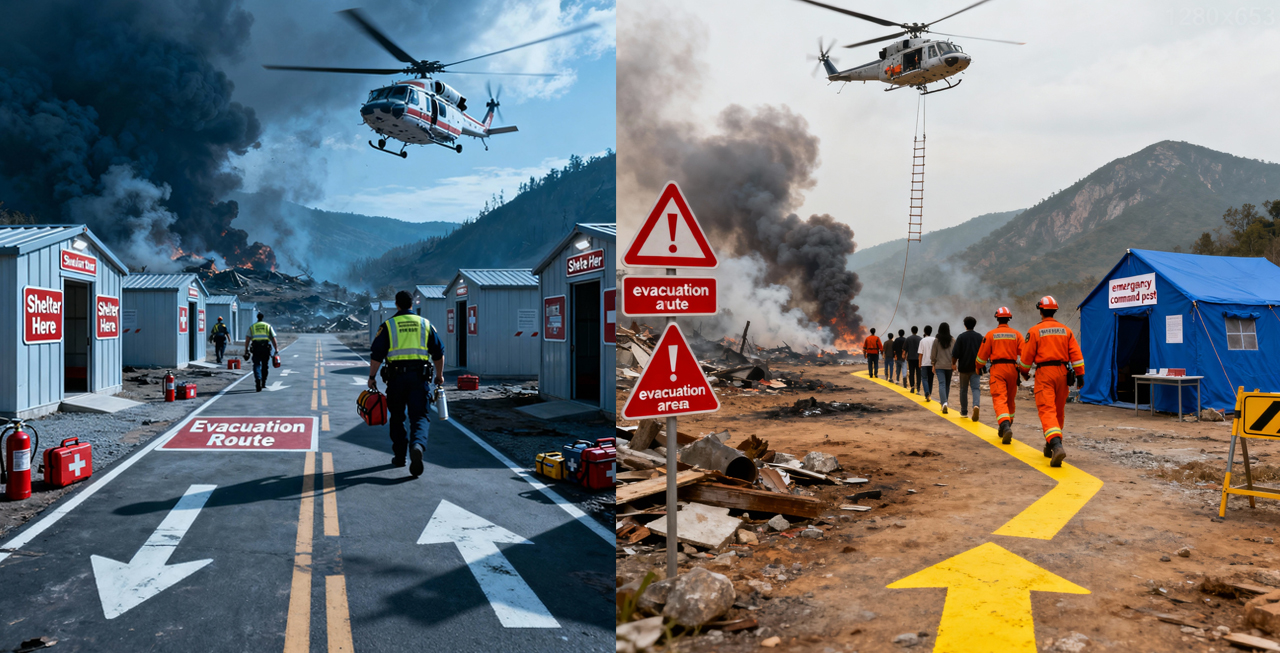
Emergency Response Plan (ERP) is a plan to respond quickly and effectively to emergencies to protect people, assets, and the environment
Here are the main stages of an Emergency Response Plan (ERP):
1. Emergency Identification : recognizing the incident or emergency situation.
2. Plan Activation : activating the ERP according to procedures.
3. Evacuation & Protection : securing employees, visitors, and key assets.
4. Emergency Communication : delivering clear, fast, and coordinated information.
5. Response Actions : immediate steps to handle the emergency (e.g., fire suppression, first aid).
6. Coordination with External Parties : working with fire, police, medical, or other authorities.
7. Initial Recovery : ensuring safety to resume temporary operations.
8. Evaluation & Update : reviewing the incident, assessing ERP effectiveness, and updating the plan.

Crisis Management Plan (CMP) is a structured plan to handle crises, minimize organizational impact, and enable faster recovery, The main stages of a Crisis Management Plan (CMP) usually include:
1. Crisis Identification : recognizing potential or actual crises.
2. Crisis Team Formation : establishing a dedicated team to handle the crisis.
3. Impact Assessment : evaluating the scale and consequences of the crisis on the organization.
4. Decision Making : determining appropriate response actions.
5. Crisis Communication : delivering information quickly, clearly, and in a coordinated manner.
6. Action Implementation : executing the planned crisis response strategies.
7. Recovery & Normalization : restoring organizational operations to normal conditions.
8. Evaluation & Improvement : reviewing the crisis handling process to improve future plans.

Disaster Recovery Plan (DRP) is a plan to restore IT systems and infrastructure after a disaster or major disruption, The main stages of a Disaster Recovery Plan (DRP) usually include:
1. Risk & Threat Identification : recognizing potential disasters or IT disruptions.
2. Critical Systems & Assets Determination : identifying the most important systems, applications, and data.
3. Recovery Strategy : designing methods to restore systems and data (e.g., backups, standby servers).
4. Recovery Plan : detailed steps to recover systems after a disaster.
5. Roles & Responsibilities : assigning accountability for each recovery step.
6. Activation Procedure : when and how the DRP is activated during an incident.
7. Testing & Validation : conducting simulations to ensure plan effectiveness.
8. aintenance & Update : reviewing and updating the DRP regularly to reflect business and technology changes.

BCP Procedure is a set of operational steps executed during disruptions to keep the business running or quickly recover, It usually includes:
1. Activation Procedure : how to activate the BCP.
2. Emergency Response : initial steps to protect people, assets, and environment.
3. Communication Procedure : internal and external communication flow.
4. Recovery Procedure : restoring critical business processes and systems.
5. Restoration Procedure : returning operations to normal.

Business Continuity Management Implementation

BCM is implemented by analyzing risks, creating strategies and a BCP, then implementing, testing, and regularly updating the plan.

F.A.Q

Our Feedback

To make this app a means of information exchange

Happy Visitors

22228

News Read

21981

Confirm by Contact

3

Viewed Documents

5329